Every year brings a shift in how people think about their walls. 2026 is no different. But this year, the shift feels more personal. Less about following rules, more about creating spaces that actually feel like yours.
Here's what's trending in wall art this year and how to bring each look into your home without overthinking it.
Oversized Statement Art
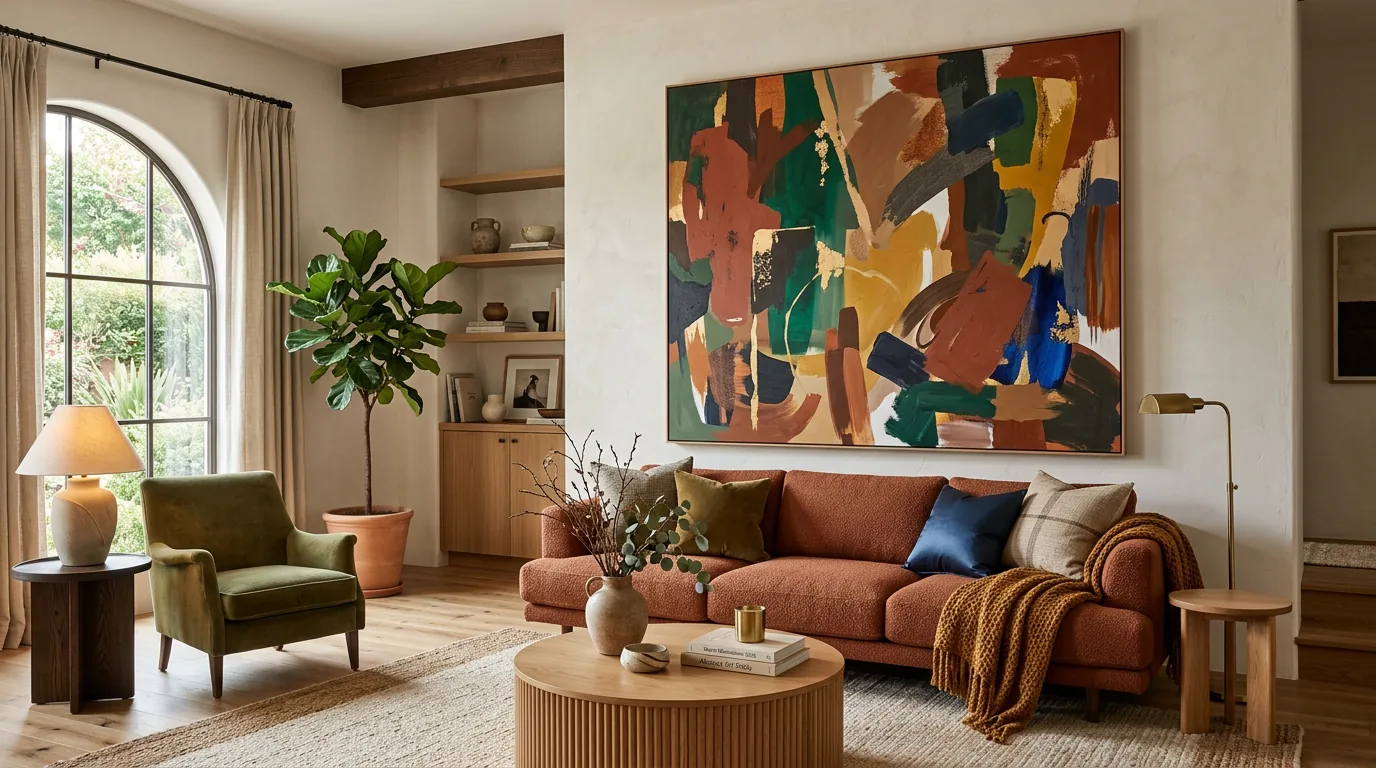
The days of scattering tiny prints across a wall are fading. In 2026, one big piece does the talking.
An oversized canvas or framed print creates an instant focal point. It anchors the room, gives the eye somewhere to land, and makes even simple spaces feel intentional.
How to style it: Pick one wall in the room (usually behind the sofa or above the bed) and go big. Let the art breathe by keeping the surrounding area clean and simple.
Best for: Living rooms, dining rooms, and open-plan spaces where you want to define zones.
Warm Minimalism
Minimalism isn't going anywhere, but it's softened up. Cold, stark white walls with a single black-and-white photo feel dated now. The 2026 version is warmer. Think soft lines, muted earth tones, and subtle texture.
This trend works because it creates calm without feeling empty. Pieces with gentle gradients, organic shapes, and sandy or terracotta palettes feel both modern and welcoming.
How to style it: Pair warm minimal art with natural materials like linen, wood, and stone in your room. The art should feel like it belongs to the same color family as your furniture and textiles.
Best for: Bedrooms, reading nooks, and Scandinavian-inspired interiors.
Nature and Botanical Prints
Nature remains one of the most requested themes in wall art. Botanical prints, forest landscapes, ocean scenes, and mountain panoramas bring the outdoors in without the maintenance.
What's different in 2026 is the palette. People are moving away from bright, saturated greens toward muted, earthy versions. Think sage, olive, dusty rose, and warm beige.
How to style it: Botanical prints work as singles or in a curated pair. Place them in rooms where you want a calming atmosphere. Pair with real plants for a layered, organic feel.
Best for: Bathrooms, hallways, kitchens, and anywhere that could use a natural touch.
Bold Abstract and Maximalism
On the opposite end of the spectrum, maximalism is alive and well. Bold colors, expressive brushstrokes, and layered compositions are showing up in homes that embrace personality over perfection.
Abstract art is perfect for this because it doesn't need to "match" your room. It just needs to make you feel something. In 2026, people are leaning into jewel tones like deep teal, burnt orange, and rich burgundy.
How to style it: Don't try to match the art to your throw pillows. Instead, pick a piece you love and let it set the mood for the room. Build around one or two colors from the artwork.
Best for: Living rooms, creative spaces, and accent walls where you want energy and personality.
Personalized and Custom Art
This might be the biggest shift of all. People are moving away from mass-produced decor and toward art that means something to them. Custom pieces, personalized prints, and custom-created art that reflects individual taste are all on the rise.
The appeal is obvious. When your wall art is something you helped create or chose with intention, it feels different than pulling something off a shelf at a home store. It turns a wall into a conversation piece.
How to style it: Use custom art as a statement piece or build a gallery wall mixing personal favorites with complementary prints. The key is curation, not everything needs to match, but it should feel collected, not random.
Best for: Any room where you want your space to feel truly yours.
Textured and Mixed-Media Looks
Flat prints are sharing the spotlight with art that has visible texture. This can mean actual 3D elements like impasto-style canvas, or it can mean prints that create the illusion of texture through brushwork and layering.
Canvas prints are a natural fit here because the woven texture of the material adds depth that paper can't replicate. It's subtle but it makes a difference, especially with abstract or painterly styles.
How to style it: Textured art works best as a solo piece on a quiet wall. Let the texture be the feature. Side lighting (a lamp or picture light) can enhance the dimensional quality.
Best for: Living rooms, dining areas, and entryways.
Retro and Vintage Revival
Vintage-inspired art is making a comeback with a modern twist. Think mid-century color palettes, retro typography, and nostalgic imagery reimagined with cleaner lines and contemporary composition.
This trend works because it adds warmth and character without feeling stuffy. It's art with personality and a sense of history, even when it's brand new.
How to style it: Mix vintage-style prints with modern frames for contrast. A retro piece in a sleek black frame bridges old and new beautifully.
Best for: Kitchens, home bars, and eclectic living spaces.
How to Pick the Right Trend for You
Here's the thing about trends: they're suggestions, not rules. The best wall art is the one that makes your space feel right when you walk in.
If you're drawn to calm and quiet, lean into warm minimalism or botanical prints. If you want energy and color, go bold with abstract maximalism. If you want something nobody else has, create your own custom artwork.
The beauty of creating custom wall art with Primpter is that you're not locked into what's available on the shelf. You describe what you want, Primpter creates it, and you pick the format: canvas, fine art print, or framed. No compromise between what's trending and what you actually like.
That's the real 2026 trend: making your walls yours.