You found the perfect piece of wall art. The colors are right, the style fits your space, and you can already picture it on your wall. Then comes the question that trips everyone up: what size should I get?
Too small and it looks lost. Too big and it overwhelms the room. Getting the size right is the difference between wall art that transforms a space and wall art that just... hangs there.
Here's the thing: you don't need to be an interior designer to figure this out. There are a few straightforward rules that work every time.
The 60-75% Rule
This is the most reliable starting point. Your wall art should cover roughly 60% to 75% of the available wall space.
"Available wall space" means the wall area that isn't covered by furniture, windows, or molding. So if you have a 2-meter wide wall above your sofa with nothing else on it, your art should be somewhere between 120cm and 150cm wide.
This ratio keeps things balanced. It fills the space without crowding it.
Sizing Above Furniture
Most wall art ends up above something: a sofa, a bed, a console table, a desk. When that's the case, use the furniture width as your guide instead of the wall.
Above a sofa: Your art should be about two-thirds the width of the sofa. A 210cm sofa? Look for art around 130-140cm wide. This creates visual balance and makes the sofa and art feel like they belong together.
Above a bed: Same idea. Match the art width to roughly two-thirds of the headboard or bed frame. For a queen bed, that's about 100-120cm wide. For a king, go bigger: 120-150cm.
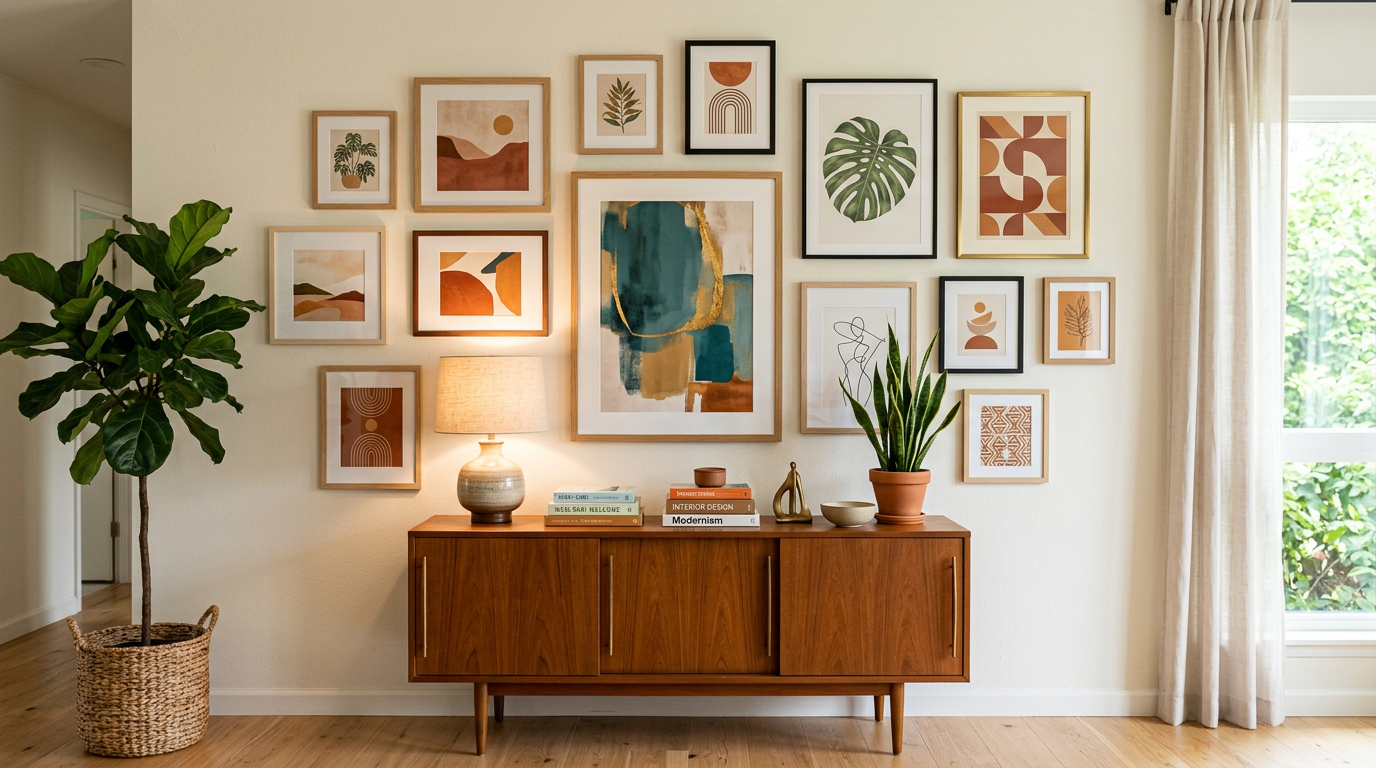
Above a console or sideboard: Aim for the art to be slightly narrower than the furniture beneath it. If your console is 120cm, your art should be around 80-100cm wide.
Living Room
The living room is where most people want to make a statement. If you have one main wall behind the sofa, this is the place for a large or oversized piece.
For a typical living room, A1 (59 x 84cm) is a safe minimum. If your wall and sofa allow it, going larger creates a real focal point. A single oversized piece often looks more polished than a collection of smaller ones.
If you prefer a gallery arrangement, keep the total grouping within that 60-75% width rule and leave 5-8cm between frames.
Bedroom
The bedroom benefits from calm proportions. Art above the bed shouldn't overpower the space; it should anchor it.
A horizontal piece that's about two-thirds the width of your headboard works perfectly. If you have nightstands on each side, make sure the art doesn't extend past them.
For bedrooms, A2 (42 x 59cm) to A1 (59 x 84cm) is the most common sweet spot, depending on bed size.
Home Office
Your office wall art is something you'll look at for hours, so size matters here. A single medium piece (A2 or A1) directly in your line of sight works well for focus.
If the art is behind you (visible on video calls), you can go bigger. It becomes part of your backdrop, and larger pieces photograph better on camera.
Hallway and Entryway
Narrow walls call for vertical pieces. A tall, narrow print draws the eye upward and makes the ceiling feel higher. For hallways, A3 (30 x 42cm) or A2 in portrait orientation works great.
In an entryway, the art is the first thing people see. A single well-sized piece creates a stronger first impression than a cluttered arrangement.
Dining Room
Above a dining table or buffet, horizontal artwork tends to work best. It echoes the shape of the furniture below and creates a sense of width.
A1 or larger is ideal for dining rooms, especially if the table seats 6 or more.
Height Matters Too
The center of your artwork should sit at eye level, roughly 145-150cm from the floor. This is the gallery standard, and it works in homes just as well as museums.
When hanging above furniture, leave 15-20cm between the top of the furniture and the bottom of the frame. Any more than that and the art feels disconnected. Any less and it feels cramped.
When in Doubt, Go Bigger
Here's a tip from interior designers: almost everyone underestimates the size they need. A piece that looks large leaning against the wall in the shop will look smaller once it's up on a big empty wall.
If you're torn between two sizes, go with the larger one. Undersized art is one of the most common decorating mistakes. A piece that's slightly too big still creates impact. A piece that's too small just looks like an afterthought.
Quick Reference: Common Art Sizes
A4 (21 x 30cm) Best for small accent walls, powder rooms, shelves, and desk areas. Works well in groups.
A3 (30 x 42cm) Good for narrow walls, bathrooms, and kitchen nooks. A solid choice for hallway galleries.
A2 (42 x 59cm) The most versatile size. Works as a standalone piece in bedrooms, offices, and medium-sized walls.
A1 (59 x 84cm) Statement size. Perfect above sofas, beds, and dining areas. Makes a real visual impact.
Larger than A1 For large walls, open floor plans, and spaces where you want the art to be the main event.
How to Test Before You Commit
Not sure if a size will work? Try this: grab some newspaper or wrapping paper and cut it to the dimensions you're considering. Tape it to the wall where the art would go. Step back. Walk around the room. Sit on the sofa. Does it feel right?
This 5-minute test saves a lot of second-guessing.
Creating the Perfect Piece in the Perfect Size
With Primpter, you're not limited to whatever sizes a gallery happens to stock. You create your own artwork using AI, then choose the exact print size and format that works for your wall.
Whether you need a small accent piece for a reading nook or a large statement canvas for your living room, you control the dimensions. And because every piece is printed on demand, there's no compromise between the art you love and the size you need.
Ready to find the right piece for your wall? Start creating and see how your space comes together.